
Q&A
Q-0001 · 2026-10-20How Operations Leaders Protect Team Priorities
Every request can sound urgent, but not every request deserves to change the plan. Operations leaders and field experts share practical ways to protect team priorities, revenue, safety, and key commitments. Learn how clear criteria and timely decisions keep important work moving.

Apply the One-Way Door Test
 Christopher PappasFounder, eLearning Industry Inc
We use a one-way door test to guide decisions. If a delay can be corrected with little effort, it should not automatically take priority over work that creates lasting value. We focus immediate attention on choices that cause lasting risks, missed commitments, or damage to trust that is difficult to repair.
We applied this approach when several stakeholders requested exceptions to an established process near the end of a demanding quarter. Handling each request separately would have pulled senior operators away from a strategic quality initiative. We grouped the requests, set a single review point, and approved only those involving genuine risks. The initiative stayed on track, and each request received fair treatment, showing that urgency needs evidence rather than volume.
Compare Weekly Revenue Impact
 Will MitchellFounder, StartupBros
My operations calendar had a recurring Wednesday block where my team and I reviewed every open project and marked which ones were generating revenue that week versus which ones might generate revenue eventually. When a fire drill came in on a Tuesday, we didn't debate whether to drop everything. We looked at what was already on the board for that week's revenue column and asked whether the new request moved money faster than what we were already doing.
Most of the time the answer was no. The loudest requests came from internal bottlenecks or partner timelines that felt urgent but weren't tied to anything customers were waiting on right now, so we'd slot those into the next open Wednesday review and keep working.
The weeks we skipped that review or let someone bypass it, work scattered fast. People would spend half their hours responding to whatever hit their inbox last. When we stuck to the calendar, my team finished more revenue-generating work in fewer hours because they weren't constantly re-sorting their own priorities.
That Wednesday checkpoint didn't require a new system or software. It just forced a pause before any redirect happened.
Safeguard Committed Release Outcomes
 Roman SurikovFounder & CEO, Ronas IT | Software Development Company
I decide what can wait by asking whether the request changes the outcome we're committed to deliver now. Urgency matters when delaying a task would break a dependency, a deadline, or a user journey that the current release depends on.
We faced a version of that choice while preparing Lainappi, a rental app, for its first release. The client wanted to test the idea quickly and keep costs down. They proposed an "I want to rent" section where people could post requests for items. During the design review, we judged that scenario unlikely to be used and dropped it. We focused the first version on the path people needed to complete an actual rental: finding an item, agreeing through chat, verifying the parties, and paying. The budget constraint kept the first release focused on those core features. The app launched in a short time. We continued developing it, adding features that users needed after the first release.
The same test works for an operations queue. A request that protects today's committed service or unblocks a critical handoff gets attention now. A request for a useful improvement can wait for the next planning point, with an owner and a reason recorded so it doesn't disappear. My advice is to make the requester identify the consequence of waiting before you displace the team's highest-value work. If that consequence is weak, hold the priority and give the request a date for reconsideration.
Rank Priorities and Split Teams
 David JolesChief Operating Officer, PURCOR Pest Solutions
It's all about determining priorities and assessing level of urgency. Multiple things can all appear to be urgent and high priority, but the reality is that they can always be ranked from most to least necessary to complete first or put more effort toward. We'll usually talk as a team to get everyone's input on urgency and priority and go from there, because it's invaluable to get multiple perspectives here in order to make the right call. Also, in situations like these, it helps to divide the team up. Rather than having everyone work on one thing and then the next on the list, if you can have at least a few people still working on the high-value work while the rest work on urgent matters, that will help maintain that momentum you need.
Protect Loan Flow
 Christopher LedwidgeCo-Founder & Executive Vice President of Retail Lending, theLender.com
Left unchecked, urgent asks scatter the team off core file and builder work. Ranking protects production instead. I rank each urgent ask by whether it protects or restores closing capacity, borrower communication, or branch P&L this week. Before I pull anyone off core file or builder work, I require a quick check on active locks, conditions, or funded volume. That keeps the team on revenue-critical tasks. The principle is simple: protect work that keeps loans moving and customers informed over one-off noise that doesn't change delivery or profitability. Failing requests get only a later slot or a clear no.
Demand Self-Service Solutions
 Amit AgrawalFounder & COO, Developers.dev
Protecting high-value work requires categorizing every incoming request by its impact on the system's long-term health rather than its immediate volume. In software operations, urgency often masks underlying inefficiency. When a flood of minor UI adjustments or ad-hoc reports hits the floor, they easily consume the time reserved for architectural improvements and automation projects-the very work that prevents those issues from recurring. I use a strict filter: unless a request resolves a production-critical failure or a contractual breach, it is weighed against the compound interest of our long-term engineering goals. If the work is merely loud but not structurally significant, it is triaged into a deferred sprint.
During a period of rapid scaling, our support volume threatened to derail core product development through dozens of urgent manual data correction requests. Instead of continuing to divert senior engineers to these one-off tasks, I implemented a rule where any department requesting an immediate manual fix had to participate in the requirements gathering for a self-service tool to automate that fix. This shifted the conversation from immediate relief to permanent resolution. By forcing this trade-off, internal requesters became more disciplined about what truly required intervention versus what could wait for a permanent fix.
Effective prioritization requires a willingness to let small fires burn to ensure you are building a fireproof structure. If you only ever respond to what is loud, you will never build what is lasting. Operations leaders must act as a firewall, ensuring the team's cognitive load is reserved for work that reduces future friction rather than just surviving the current day's backlog.
Honor Outside Clocks
 Sagar AgrawalFounder, Qubit Capital
If you ask me what can wait, the first thing I check is whose clock is running. We sit between early-stage founders and the investors they want to reach, with roughly 60 people doing that work. A request from inside the company almost never has a real deadline, even when it arrives in capitals. A founder with an investor call on Thursday does. One week last spring I asked ops to rebuild our sales pipeline report while 3 founders needed prep notes on investors they were meeting within 2 days. My report waited 9 days because nobody outside Qubit would notice it was late.
The rule wobbles when 2 founders both have calls on the same Thursday. A colleague in ops marks every tracker row that someone outside Qubit is waiting on with a red dot and clears the dots before touching anything else.
Test Urgency Against Consequences
 Kenneth ShenCEO, Founder, Pigment
The decision principle that changed how we handle competing urgency at Pigment was asking one question: is this urgent because it matters, or is it urgent because someone is anxious?
That distinction sounds simple but it filters out about half the interruptions. A production outage is objectively urgent. A stakeholder wanting a status update before their meeting is anxiety-driven urgency. Both feel pressing in the moment. Only one actually requires the team to stop what they are doing.
The real situation where this saved us was during a product launch week. We had three competing requests: a customer escalation that looked critical, a partnership deliverable with a hard deadline, and an internal data migration that was supposed to happen that same window. My instinct was to split the team across all three.
Instead, I asked the team to rank each one by this question: what happens if this waits 48 hours? The customer escalation turned out to be cosmetic, not a blocker. The data migration had a soft deadline despite being presented as hard. The partnership deliverable was the only one with real consequences for delay. We focused there.
The principle is not about ignoring urgent requests. It is about pressure-testing the urgency before you let it redirect your team. Most things that feel like emergencies are just uncomfortable situations that someone wants resolved quickly. Protecting your highest-value work means being willing to let the uncomfortable wait.
Measure Escalating Delay
 Ben Frederick MDFounder, Dr. Frederick's Original
I made everyone attach a number to the word urgent. Specifically, what one more week of waiting costs us in dollars or customers. If nobody could put a figure on it, the request went behind the work that already had one.
The second filter was whether the delay compounds. A stockout on a core product gets worse every single day, in lost sales, in search position, in the review flow that follows. A report rebuild, a label refresh, a partner's data feed request, those sit flat. Waiting 10 days costs almost exactly what waiting 2 days costs.
One week three things hit at once. A supply problem on one of my best sellers, an internal push to rebuild reporting, and an outside request for a custom data file. I put the whole team on the supply problem and told the other two they'd hear from me in 10 days, with a date, not a maybe.
Both waited, and neither asker followed up. The specific return date was what made that stick.
At 4M+ customers, there were more urgent requests most weeks than people to handle them. The ones with a real compounding cost got my team. Everything else got a calendar date.
Prioritize Revenue at Risk
 Joyshree BanerjeeChief of Staff and Content Engineering Lead, VisibilityStack.ai
Last Tuesday felt like someone lit a match in a fireworks factory. Three servers down, two contracts expiring, one VP screaming about his pet project. My team looked ready to sprint in different directions. I grabbed our quarterly numbers and did the math fast. Biggest client's servers? Fixed that first - they're 60% of our revenue. Contract worth nearly half our Q4 target? That's next. The VP's thing represents maybe 2% of our pipeline, so he got to wait. Called him myself to explain the order. He wasn't thrilled, but I walked through the revenue impact. Most people accept 'you're third because...' better than radio silence. Could we have juggled all six? Sure, and done each one poorly. Sometimes letting the smaller fires smolder saves the whole building.
Identify Tomorrow’s Failures
 Victor SmushkevichFounder, Tested Media
I sort every urgent request with one question: what breaks if this waits until tomorrow? If the answer is nothing, it waits. If the answer is a live ad account burning budget or a site that's down, it jumps the line.
Running an agency, the pull is constant. A request to tweak a landing page headline shows up at the same moment as a Google Ads campaign that needs its search terms reviewed. The headline request usually arrives with the louder message. The ad account is the one losing money by the hour, so it gets the team first. The headline goes on a list with a time next to it.
That time is the part most people skip. A request that waits without an answer gets chased, and chasing is what pulls a team off the real work. So everything that waits gets a reply within the hour saying when it will be done. Once people have a date, they mostly stop pinging.
I also keep one block of the day closed to requests, because the highest-value work, like fixing how a site converts, needs hours without interruption. Anything that isn't an emergency gets triaged at set times, not whenever it lands.
Speed does matter in some places. MIT research found you're 21x more likely to qualify a lead if you respond within five minutes. So lead response gets a standing exception. Everything else has to earn its way past the protected block.
Protect Guest Check-Ins
 Carolyn VasquezFounder, Ready Rental Cleaning
The question I ask is what breaks if this waits until tomorrow. If the answer is a guest standing at a locked door with unmade beds, it jumps the line. If the answer is that somebody's annoyed, it gets a time.
In turnover cleaning the fixed clock is check-in. A crew is inside a home, a guest lands at 3, and the texts start. A host wants a quote on a deep clean. Another wants Thursday moved to Wednesday. All of it feels urgent because someone is typing fast, and almost none of it has a guest attached.
What shows up over and over is that the loudest request and the most expensive request are different things. The loud one gets a short reply from me with an actual hour I'll get back to them. The expensive one is the turnover with a check-in behind it, and the crew stays on it. Nobody gets pulled off to answer a question from a bathroom floor.
I also keep the crew out of the inbox entirely. They clean. Anything that needs a decision comes to me, and the order is already settled before the day starts.
Demand Clear Decision Facts
 Brian HansenPresident, Rocket Pilots
My strongest rule is to preserve decision quality when pressure rises. I do not allow a crowded inbox to force rushed choices that create more work later. Before reprioritizing, the team clarifies the owner, consequence, deadline, and minimum acceptable outcome for each request. Missing information usually signals that a request can wait briefly.
During a demanding period, a request arrived with vague language but strong urgency. A short clarification revealed that no immediate decision was required, only acknowledgment. That took minutes and protected the team from abandoning a complex task near completion. The request received a clear response, while the critical work stayed intact. Better questions often create more capacity than faster movement.
Require Evidence for Escalations

Operational maturity means distinguishing a true emergency from an anxiety transfer. Many urgent requests arrive because someone lacks visibility, not because the underlying work is at risk. Before moving people, establish what has changed, who is affected, what deadline is immovable, and what happens if the request waits one business day.
During a high-pressure quarter, I introduced a requirement that every escalation include those four answers. Several requests disappeared once the requester examined the actual consequence of delay. The remaining issues were easier to rank because impact was explicit rather than implied. This protected specialist capacity for strategic work while giving stakeholders a fair, transparent mechanism to raise legitimate risks.
Honor Event Commitments
 Alexis GomezOwner, Parlani Party Rentals
Safety of events is my top priority, followed by the delivery with specific delivery dates, and then accommodating any last-minute change. A request that does not impact the safety, preparation, or scheduled start time of an event may be delayed. I will never reassign a crew to a new delivery just because a new request was received.
If there is a busy wedding weekend and a client requested some extra chairs, I would make adjustments to the schedule as long as they didn't negatively impact other events. When we cannot meet a client's request because of scheduling issues, we will provide the best possible alternative. My basic rule is that a new request should NEVER CAUSE US TO MISS A DEADLINE OR OBLIGATION.
Route Requests Through Shared Criteria
 Kamyar ShahFractional COO, World Consulting Group
Urgent requests pull operations teams off course because urgency is declared by the requester, not measured against anything. Without a shared standard, the loudest request becomes the priority by default. High-value work then slips quietly, one interruption at a time.
The decision principle that protects priorities is a simple test applied before any work is displaced. Ask what breaks, for whom, and by when if the request waits. Requests that threaten customers, safety, or cash move first. Everything else enters the queue with a committed date.
Make the test visible to the people who send requests. Publish the criteria, name one person who owns intake, and require every urgent request to pass through that owner. Requesters learn to state consequences instead of volume. The team keeps its focus because the process, not the mood of the day, decides what waits.
Fix Root Causes
 Scott ShirleyFounder & CEO, Pledge It
I first look at whether a request addresses a root problem or needs a quick fix. When several customers ask for different solutions to the same issue, fixing the cause saves time for everyone.
Timing matters too. Most nonprofits we serve have one or two people managing an entire event alongside their regular work. A request affecting an event this weekend needs immediate attention. A feature they'd like before next spring can wait, and I'm upfront about that.
During fall walk season, for example, a sponsor might need a custom report, a board member might want a feature walkthrough, and a campaign launching Friday might have a registration issue. I'd handle the registration issue first because the event deadline can't be recovered. The other requests can follow.
Teams make better decisions when they understand the mission and have the freedom to act on it. If every decision needs a leader's approval, work slows down.
Put Safety Before Arrival Order
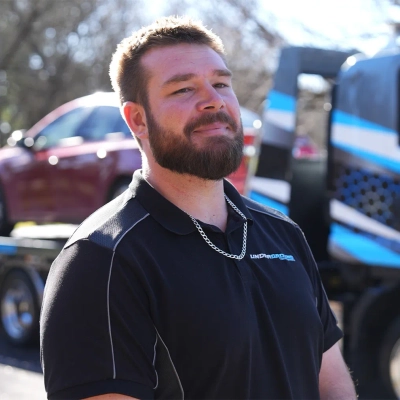 Joshua HarrisonFounder, Underground Towing & Salvage
In towing, I prioritise by consequence rather than by who calls the loudest. A vehicle creating a safety risk, blocking traffic or leaving someone stranded in a vulnerable location takes precedence over a transport job that can safely move by an hour.
That principle makes busy periods much easier to manage because the team has a clear reason behind the order of jobs. We still communicate quickly with customers whose jobs are delayed and give them a realistic update. The lesson for me has been that prioritisation works best when urgency is based on safety and operational impact, not simply arrival order.
Compare Wait Penalties With Context Loss
 Siim KostabiCEO, Pageloot
Every "urgent" request comes with a cost that nobody names. Two years ago we had a customer support spike right before a product launch, and the team wanted to pause everything to field tickets. I said no, but not because the tickets didn't matter.
The rule I used was simple: a request is only urgent if missing it costs more than delaying the launch. We timed it. Support tickets had a median response time of 8 hours. A one-week launch delay cost us, conservatively, four lost enterprise deals we were in final calls on. So we hired two contractors for a week, moved support to them, and the core team finished the launch.
The principle transfers. Urgency isn't a property of the request itself, it's the ratio between the cost of waiting and the cost of switching. Most teams reverse that. They treat urgency as whatever landed in Slack last, which means they switch constantly and the launch never ships.
The second part is harder: the person asking for urgent help doesn't know the cost of delay on your end. So you have to say it out loud. "This matters and we can't do it right now because X ships in 4 days and loses us Y if it doesn't." Most of the time they'll respect that. Sometimes they'll tell you Y is smaller than you think. That's information you need.
What kills priorities is silence. Not the request itself.
Address Hazards Before Maintenance
 Michael HambrickOwner, Operations Manager, Rooter Express SC
"I schedule my work according to the POSSIBLE OUTCOME of delaying the request rather than the stated level of urgency. Requests that may cause property damage or pose a risk to health (e.g., active leaks and/or sewage backups) will be addressed first. On the other hand, less urgent requests, such as small clogs and routine maintenance, are put off until there is no immediate threat to either person or property.
A helpful rule to ask is, "If I put this off until tomorrow, what will be more expensive or difficult?" Teams focus on the work that will result in the greatest cost of delay. I work on urgent problems as soon as possible so they don't cause any further problems. However, I delay less urgent routine maintenance to reduce scheduling conflicts."
Defend Morning Focus Time
 Steven Talia, CFP®Co-Founder & CEO, MY PRO: TRUSTED PROS™
When competing urgent requests start to pull the team off priority work, I decide what can wait by using a simple boundary: protect our highest-value focus time and only break it for truly urgent issues. In practice, we protect the first 2.5 hours of the day from non-urgent messages and meetings, and the team batches communication until after 9:30am. The decision principle is that urgency alone does not override priorities, so interruptions need to clear a higher bar than "important" or "time-sensitive." That approach reduced reactive work in the morning and pushed teams to prepare questions and decisions more deliberately for later in the day. It also strengthened end-of-day communication because people knew they needed to be ready and clear once the protected window ended.
Contain Interruptions and Complete Milestones
 Darryl StevensFounder & CEO, DIGITECH
When urgent requests compete, I make the comparison explicit by naming the consequence of waiting on each. I do not replace milestones with smaller-consequence work if the incoming task can be contained. Switching the entire group strands work that has already absorbed significant coordination, so when a valuable deliverable is close to completion, I assign one person to contain the new issue and let the remaining team finish the current unit. One situation that reinforced this approach was having a client deliverable close to completion when another urgent request came in; one person triaged the new issue while the rest of the team finished the work already underway. Urgent matters are those that require immediate action. These items typically have visible deadlines and consequences for delaying action. And that sense of urgency can ruin your day if you don't make some hard and fast rules about what needs to be done now versus later. Indeed, resolving incidents solely based on urgency can lead to misrouted work and inefficient queue management. With smart triage, you can prioritize requests in a way that makes sense for both the customer and company. Not everything can be a priority, so move less critical tasks to a lower place on the list. These tasks must still be done and not forgotten, but can generally be scheduled for future completion, if not delegated entirely.
Separate Real Harm From Noise
 Kelly Ann CollinsFounder, SheCrypto
The principle I use is a question. If this waits a week, what actually gets worse? Not what gets louder. What gets worse. Most urgent requests don't get worse, they just get more insistent.
Once, we were mid-conference season, I was on the road, and a partner came to us with a request that had a deadline attached. My team started rearranging the week to absorb it. I asked them to run the test. The partner's deadline, it turned out, was a date they'd picked themselves.
Nothing broke if it moved three days. Meanwhile we had two podcast episodes with booked guests and a publishing schedule that people outside our team were counting on. That one had a real cost to delay. We moved the partner request. Nobody died.
This works because it takes the emotion out of triage. Urgency arrives with volume. Importance arrives quietly, and it's usually the thing already sitting on the calendar. If you let the loudest item win, your team spends its week on other people's improvisation and never touches the work you actually hired them to do.
Log Blockers and Advance Tasks
 Aviad FaruzOwner, Elvis Loft & Karaoke
I ask what would become harder to put right if we waited. A request attached to a customer's confirmed event deserves different treatment from a marketing task that can resume tomorrow.
A recent example at Elvis Loft & Karaoke involved registering the business on directory sites. Several attempts stalled at sign-in or verification. I initially asked for retries, including trying a different browser. When that still did not resolve the problem, I asked to move to the next site and remember the unfinished one for later.
The useful decision was to let the blocked task stay unfinished. Completing it was not a prerequisite for researching another suitable directory, and repeating the same attempt did not provide new information. I also asked for a list showing what had been published and what had not, so postponing a task would not mean losing track of it.
For an operations team, I would make that a practical stopping rule: if another attempt depends on the same missing access or outside response, record the blocker and move to work that can progress. Give the blocked item an owner and a condition for restarting it. Protect the deadline when delay would affect a customer commitment; let a recoverable administrative delay wait.
Preserve Inflexible Task Windows
 Nick SchriverCEO & General Manager, Decorating Elves
I order my work based on how much will be LOST if I delay completing it. Prioritize tasks with fixed deadlines and then organize flexible requests around those. Is there any way for the new request to wait until later today? And can I complete the current work if I stop doing it now? Just because someone wants something done quickly doesn't mean it has to be treated as a high priority.
I am protecting the work with the most rigid schedule, not prioritizing all incoming requests. If my installation crew will have four hours of clear weather prior to the onset of afternoon thunderstorms, I will not interrupt their window for a design revision for a project that is scheduled to begin installation next week. However, if we lose installation time, we may not complete as much work as planned today. Protect the work with the LEAST FLEXIBILITY.