
Q&A
Q-0021 · 2026-11-16How Operations Leaders Make Change Stick With Frontline Teams
Change succeeds when frontline workers help shape it, not when new processes are simply announced. This article shares practical lessons from operations leaders and other experts who have made change work in the field. Their strategies show how to build trust, test ideas, and turn daily feedback into lasting results.

The perspectives in this article were written by the named contributors and submitted through Connectively. Connectively's automated system selected them and used AI to write the headline, introduction, section headings, summary sections, and illustration, and to make minor edits for clarity. Articles are assembled and published automatically. Report errors to corrections@connectively.us. How we make our content
 Illustration generated with AI
What the experts said
25 signed answersSet a Nonnegotiable Frontline Safeguard
 Vaibhav KakkarFounder and Group CEO, Digital Web Solutions
We built trust by starting with a frontline measure that leadership could not change later. Change often fails because leaders describe success in broad terms while employees experience longer queues, extra steps, or greater pressure when problems arise. We asked the team to identify one condition they would not compromise on and made it clear throughout the rollout. This gave everyone a shared standard for judging progress.
The team chose response time during busy periods. We tracked it alongside the change and allowed shift leads to call for a rollback if the agreed limit was crossed. Although this was rarely needed, it showed employees that efficiency would not come at their expense. As the measure remained steady, doubts turned into useful suggestions, and the change gained lasting support.
Lead From the Field and Publish Results
 Ronald OsborneFounder, Ronald Osborne Business Coach
The approach that made a hard change stick in my own company was simple: I did the new process in the field myself before I asked anyone else to. I built an NBN telecom contracting company in Australia to about 30 staff, and the biggest operational change we ever made was moving crews from contractor rates to a legal minimum base plus uncapped performance pay, with every job captured in the field on our own software and checked by an office admin. On paper it was clearly better. On the ground, experienced jointers saw extra admin and a pay cut. What earned trust was two things. First, I captured my own jobs in the app for weeks, on the same sites, so nobody could say head office didn't understand the work. Second, we published the numbers. Once crews could see that output and quality were tracked fairly and the top people were on track for far more than before, resistance turned into competition. Some of those employees went on to earn around $200,000 a year. We didn't slow the business down to roll it out, because the change ran alongside live work instead of in a separate training phase. My rule from that time still holds for the operators I coach today: never ask frontline people to do what you won't do yourself, and show them the scoreboard before you ask for their trust.
Turn Critics Into Pilot Designers
 Riken ShahFounder & CEO, OSP
I believe the key is to treat resistance as feedback, not friction. When a change looks good on paper but faces pushback from frontline teams, I first understand what's driving it. Often, the people closest to the work see practical challenges that may have been missed during planning. I involve the most vocal teams in a small pilot, gather their feedback, and make quick adjustments while the rest of the business continues as usual. This builds ownership without disrupting operations.
For example, when we moved from informal onboarding to structured documentation, senior managers were concerned about repetitive processes and project delays. I involved them in designing the onboarding modules, simplifying redundant checkpoints while retaining essential knowledge. Within two quarters, new-hire ramp-up time was reduced by nearly three weeks, and adoption improved significantly. I would say, involve people early, act on their feedback quickly, and scale what works. When frontline teams see their input translating into real improvements, adoption becomes ownership rather than compliance.
Embed Guidance at Decision Points
 Roman SurikovFounder & CEO, Ronas IT | Software Development Company
When a process change meets resistance, I check the point in the workflow where the old habit is still being repeated. We had a sales follow-up playbook with one central rule: every message should add value to the prospect. It covered timing, lead temperature and how to adapt a message to the stage of the conversation. We removed generic check-ins from the guidance because our data showed they weren't working. Six weeks after we published the playbook, those check-ins were still going out.
We put an AI validator before the send step. It reads the draft against the playbook, returns a verdict and suggests a corrected message before the salesperson sends the follow-up. The person writing can consider an alternative while the prospect's context is still in view. We apply the same standard to manually written and automated drafts. The check sits where the behavior occurs, so people can use the rule without leaving the work to consult a separate document. Putting a check at the point of sending changed the behavior.
For a frontline team, a useful correction inside the task is easier to adopt than another instruction to remember. Trust depends on whether the suggestion helps with the message in front of them. I would review the validator's verdict against real drafts with the people who send them. If it flags a useful follow-up or proposes an empty rewrite, the guidance needs to change. The team can then use the check without routing every message through a manager for approval.
Start with a recurring exception you can spot in live work and put the rule at that decision point. Check the proposed corrections with the people using them, so the next message they send reflects the guidance and the prospect's actual context.
Remove Access Without Disruption
 Jens HagelFounder & Owner, kjello
A Hamburg client had grown from 4 to over 30 people, and everyone still had admin rights on their PC. On paper, taking those rights away looked like a fight. We removed them, and nobody missed them. After 20 years in mid-sized IT and as founder of my own firm, I've learned that people defend a habit far less than managers expect when the change costs them nothing in their daily work.
Jens Hagel, Founder & Owner, kjello (Hamburg, Germany)
Explain Benefits and Assign Human Oversight
 Filip PesekCEO, DonnaPro
I'm Filip Pesek, Founder and CEO of DonnaPro, a premium virtual executive assistant agency serving CEOs, founders and senior executives across Europe and the UK.
In my experience, resistance usually has little to do with the change itself. It is that the frontline team cannot see what is in it for them. When we introduced quality reviews that use AI to score our assistants' real client calls against each client's own criteria, the obvious fear was surveillance. So before switching it on, we did two things. We were honest about why it existed, and we put a named Quality Manager in charge of it rather than leaving people to feel judged by an algorithm.
The framing did more work than the tool. We showed assistants the reviews were there to protect them. Clear criteria meant no more guessing what good looked like, and a rough week could be explained instead of assumed. Once people saw the change made their own work easier to stand behind, we stopped having to push adoption at all.
Filip Pesek Founder, DonnaPro
Invite a Respected Carpenter to Demonstrate Value
 Nick KuangCo-founder, Home Sweet Home Offers
Pilot the change with one respected person on the ground, and make sure they feel the benefit before anyone else is asked to adopt it. Our frontline is the contractors and subs who renovate our houses. A while back I wanted every crew to finish a job with a written punch list and photo sign-off before the final payment. On paper it was obviously better. In practice, crews saw it as extra paperwork and a reason to hold their money. So I tried it on one house in Maple Heights with a lead carpenter the other crews respect. The day his photos came in, I released his final payment. He'd been used to waiting a week or more. He told the other guys, and within a couple of months most of our crews were sending photos without being asked. The takeaway is that people adopt a change when it solves their problem, not yours, so find that angle and let someone they trust prove it first.
Nick Kuang, Co-founder, Home Sweet Home Offers (https://homesweethomeoffers.com)
Test Side by Side With Peers
 Abhishek ShahFounder, Testlify
When frontline teams push back on a change, they're usually pointing at something the plan missed. Find out what before trying to sell it harder.
I'd pick a small group from the team that will live with the change and run it with them first. Not a pilot designed to prove the plan right. A real trial where they're allowed to say "this step falls apart on a Monday morning when we're short-staffed" and you actually change the step.
That does two jobs. The process gets better because the people doing the work found the gaps. And when it rolls out wider, the endorsement comes from colleagues who used it, not from management. Peers are far more convincing than a slide deck.
To avoid slowing the business, run the old and new way side by side for a short, fixed window and agree upfront on the number that decides it. Time per task, error rate, whatever actually matters. If the new way isn't better on that number when the window closes, you revisit it. People accept change much more readily when they know it can be reversed if it doesn't work.
What kills trust is pretending a change has no cost. If it adds steps for the frontline to save time somewhere else, say so. People can handle trade-offs. They stop listening when they're told something is easier and can see for themselves that it isn't.
Empower Your Loudest Skeptic
 Nikhil PaiCo-founder & CEO, Chronicle
At my last company, I rolled out a new way to log every customer call. On paper it saved time, but the reps hated it and kept using their old spreadsheets.
Most managers push harder at that point. I went the other way and asked our loudest skeptic to run a two-week pilot on her own accounts with full say over the steps. The rest of the team kept the old process, so nothing slowed down while she tested it.
She had to track her call times before and after, and she couldn't add steps, only cut them. She dropped two fields, kept the rest and closed tickets faster than before. Then she showed the team her own numbers at our Monday standup.
From what I've seen, frontline people trust a coworker's results more than any memo from leadership. Within a month the whole team had switched on their own, and I never had to send a single reminder.
If a rollout stalls, pick the person fighting it hardest. Give them two weeks, the power to cut steps and the stage to share what they found.
Create an Employee Review Council
 Kyle BarnholtCEO & Co-founder, Trewup
We believe trust grows when leaders make it safe for employees to question a rollout before costly changes become necessary. We created a review team made up of people who would be responsible for carrying out the process. Their role was not to support the plan blindly but to identify weak points, possible consequences, and questions customers might raise. This gave us a chance to address concerns before the rollout moved forward.
We responded to each finding openly and explained which concerns led to changes and which remained due to practical limits. This showed teams that honest feedback would be taken seriously rather than seen as resistance. It also helped us uncover problems early. Later, those employees trained their colleagues, and their support carried weight because they had been part of the process from the start.
Have Cleaners Rewrite the First Draft
 Carolyn VasquezFounder, Ready Rental Cleaning
Let the people doing the work rewrite the first draft of the change. That's the approach I trust most, and it costs almost no time.
In cleaning, a checklist or a new process always looks tidy on paper. Then a cleaner walks into a house with a locked door, a dog, and a guest who checked out late, and the paper version falls apart. The frontline person sees that gap in about thirty seconds. Management sees it three weeks later in the complaints.
So I roll a change out to one small group first and ask them to mark up what doesn't work. Then I change the document, and I tell everyone which line came from which person's feedback. That last part matters. When a cleaner sees their own fix show up in the rule, they defend it to the next person without me saying a word.
It doesn't slow the business because the pilot runs on real jobs. Nobody stops work for a training session. The change just goes live in one corner while everything else keeps moving, and the edits are small and quick.
Resistance is usually information. If three people push back on the same step, that step is probably wrong. I'd rather find that out on five jobs than five hundred.
Establish a Clear Stop Rule
 Brian HansenPresident, Rocket Pilots
Change becomes less threatening when teams help define the signal that tells everyone to pause. I introduce a stop rule before implementation, a specific condition that allows any employee to flag harm without being labeled resistant. A clear stop rule reduces quiet workarounds, because people know concerns have a legitimate route and a timely audience.
A policy update stuck after a team used a red card to identify situations where the new sequence created a risk or delay. Each card triggered a prompt review, and the findings were shared at the next meeting. Few cards were needed later, but their existence built confidence that speed would never outrank sound judgment.
Frame Change as a Reversible Hypothesis

One overlooked cause of resistance is that operational changes are often presented as permanent before they have earned that status. Frontline teams respond defensively when a draft is framed as a verdict. Treat the first version as a testable hypothesis, establish a short review window, and publish the measures that would justify keeping, changing, or retiring it.
I saw this with a code review change that had sound logic but poor timing. The team tested it during a release cycle, tracking reviewer delay, escaped defects, and overrides. The data exposed a bottleneck before expansion. Trust came from reversing an assumption publicly, and adoption followed because the change respected production reality.
Enlist Administrators Before Agents
 Dane MaxwellFounder, Paperless Pipeline
When a brokerage rolls out new transaction software, the resistance almost never comes from the owner who signed. It comes from agents who were told to change how they submit paperwork in the middle of a busy month. So the first thing I tell owners is to stop selling the change to agents and start with the transaction coordinator or office admin, the person who feels the pain of the old way every single day. Get that person running real files in the new system first. Agents trust a colleague who says this saves me time every day far more than a memo from management. We also removed one of the classic adoption blockers on purpose: Paperless Pipeline charges on the new transactions started each month, from $69 a month with unlimited users, as listed at https://www.paperlesspipeline.com/. When every extra login costs money, owners ration access and half the office stays on the old process by default. The approach that made changes stick across the brokerages I talk to is to keep the old way available for a short, fixed window and then turn it off. Running two systems indefinitely is how a sound change quietly dies. Give people a date, make the new way easier than the old one, and let the admin be the person everyone asks.
Ask Workers to Expose Bottlenecks
 Jake WardleFounder, EV Cable Hub
Build adoption by letting the people who will do the new process break it before you roll it out. When I change how something works in my business, the plan usually looks fine to me because I am not the one doing it forty times a day. The person packing orders or answering the help desk sees the snag in about ten minutes, and if they find it after launch it turns into resistance. If they find it during a trial, it turns into their fix.
I run the change on a small slice first, one product range or one type of enquiry, for a week, and ask the people doing it to tell me what is slower, not whether they like it. Slower is a fact you can act on. Like or dislike is a mood, and arguing with a mood wastes everyone's afternoon. Most of the time the complaint is a small thing, a label printed in the wrong order or a missing field on a form, and fixing it in front of them does more for buy-in than any explanation of why the change matters. The business keeps moving because the old way stays live for everything outside the slice, so nobody is asked to stop working while I figure it out.
Replace Duplicate Tasks With Digital Records
 Alexis GomezOwner, Parlani Party Rentals
I reduce the extra work that the change will bring, as opposed to convincing them to take on another responsibility. If the change means employees will need to double their workload, then the change is not for the better. Event rental businesses operate with strict schedules; therefore, each additional task must be justified by the time required to complete it. Ensure that any new processes REPLACE OUTDATED PROCESSES and do not add another task to a full work schedule.
When introducing a new digital inventory tracking program, I would discontinue using duplicate paper records and have my crews use only the electronic record to track the reservation and return of equipment. This eliminates having employees complete the same paperwork multiple times. After we determine the reliability, transition away from the previous system.
The best way to build confidence with employees is not to tell them that changes will make their job easier but rather that they now have FEWER NON-ESSENTIAL TASKS to perform.
Enable Drivers to Define Dispatch Requirements
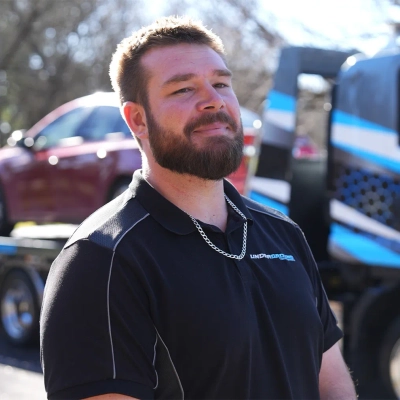 Joshua HarrisonFounder, Underground Towing & Salvage
In towing, a small change to dispatch procedures can make a significant difference on the road. One practical approach is to involve drivers in deciding which information must be collected before dispatch, particularly vehicle condition, access restrictions and recovery requirements. These details help avoid sending a standard truck to a job that needs specialist equipment. Rather than adding paperwork for its own sake, I'd show operators how each question prevents a specific problem and ask which checks are genuinely useful. Frontline teams are more likely to support a change when it solves problems they encounter every day. The key is making their work easier, not simply introducing another procedure.
Solve a Familiar Daily Frustration
 Lasse RasmussenCo-Founder, Harba
What tends to win people over is showing them how a change makes their working day easier, rather than simply explaining why a new system is better.
A good example is Oban Marina, where checking in a vessel previously involved several manual steps and could take 20 to 30 minutes. By introducing digital check-in, visitors could enter their details themselves, freeing staff to spend more time helping customers instead of handling paperwork.
The approach I'd recommend is to start with a frustration employees already recognize, involve them in identifying what needs to improve, and demonstrate the practical benefit early. It's also important to give people alternatives while they adjust.
People are more likely to support change when they can see that it solves a problem they actually deal with.
Reveal Evidence Behind Recommendations
 Rahul AgrawalFounder & CEO, QuickIntell
At an early QuickIntell deployment, an experienced coder rejected AI recommendations because she could not see their basis. We rebuilt the interface to show supporting documentation, confidence and alternatives. The problem was how we asked her to use the result.
I would involve that kind of skeptical expert before rollout. Give them a real case, let them challenge the recommendation, and turn the missing evidence into a design requirement. You learn much more from watching someone try to verify an answer than from asking whether they like the software.
Protect Technicians’ Core Priorities
 Susan HackettVice President of Operations, Williams Lifts
Find out what the employees are trying to protect by resisting a change prior to asking them to perform their jobs differently. In home accessibility, it could be the quality of the installation, customer safety, or the amount of time it takes to adequately evaluate a client's home. If a new procedure makes performing the task difficult, we have not accomplished anything.
Test the change on a limited number without disrupting normal business operations. Prior to implementing a new installation schedule, I would interview technicians if they had sufficient time to complete each assignment and necessary information. If technicians indicated that there were any issues, make modifications prior to implementation. Inform employees of how their input contributed to the decision. Employees will approve when their input is considered and results in ACTUAL IMPROVEMENT.
Preserve Expertise, Automate Repetition
 Emma RusbyDirector, Zenvy Beauty
When I added an AI step to our customer process, the team's resistance had nothing to do with the technology. They worried it would give customers worse advice than they would, and they were right to ask. Our curl analyser reads a photo and suggests products, and the people answering our inbox had spent years building their own judgement about curl patterns and porosity.
What earned trust was showing them the testing and their place in it. We tested the analyser at 99.8% accuracy across 500+ submissions against the Andre Walker reference set, and any match that comes back with low confidence is flagged so the customer can retake the photo. My team review those edge cases and the follow-up questions, which is the part of the job that needs a person, while the tool handles the repetitive first pass.
The change stuck because nobody lost the part of their work they were proud of. If a frontline team thinks a new process is replacing their expertise, they will find every flaw in it. If they can see it removes the boring bit and leaves them the hard calls, they defend it to customers better than any manager could.
Reinforce Priorities With Weekly Follow-Through
 Ben WilliamsCEO & Principal Consultant, OpsStack Solutions
In a fast-paced operation I managed, I introduced a simple project board and a weekly meeting to keep cross-team changes visible without adding a complex process. Each effort had an owner, a due date, and a brief update on progress and barriers, so the people involved could stay aligned. The board helped, but the trust came from keeping the meeting on the calendar and showing that leadership paid attention. I found that when leaders consistently review the work and follow up on missed steps, the team is more likely to keep the change going. The key is to make the process simple and show, week after week, that it matters.
Train Staff to Use Software Correctly
 Luba InzFounder, Efficiency Sprint
One rollout taught me this. The customer support representatives were using notes inside the CRM as their main source of inputting information. But whenever AI reached the data mapping, it would not pay attention to notes. So we understood that we needed to fix that first, and we actually needed to teach and train our people to use the software the correct way.
People get scared that it's gonna replace them, which is an additional psychological pressure. You have to explain that those things will only help them in their job. It's a mindset problem more than a process one, and it took around four to five months. And I make everyone report the same questions every week. Without documented proof of what you do at work, I don't know how to manage you.
Ask Users to Improve a Narrow Tool
 Jonluke DavisFounder, Data's Alpha Circle
The change that stuck for me was an AI assistant inside our Discord, and it stuck because it started from a problem people already had. Questions like "what are the current active calls?" kept sitting unanswered. Anyone who answers questions all day knows that backlog, so I built the assistant to take those first and left everything else about how the team works alone.
A tool like that can look like a threat to whoever answers questions for a living. What I keep seeing is that resistance eases when the people closest to the work can mark the tool wrong. I asked members to point out every bad answer so I could fix it, and I fixed them in the open. It took a lot of rounds of trial and error before the answers held up. People trust something they watched get better.
I also kept the scope tight and said it out loud. It answers questions about open calls and past livestreams. It doesn't trade for anyone, and the decisions stay with the people. Telling a team exactly what a tool won't do removes a lot of the fear up front, and it costs no time.
In its first month it answered 586 questions, with a median of about 10 seconds. By then most people had already used it, so there was little left to argue about.
Shrink the Ask and Model Success
 Jaspal KahlonFounder, Prodify Team
At a hospitality client, we planned short training huddles that managers would run with their staff. Both groups said no: there was no time, and the managers saw it as extra work they didn't want to own. We then offered to have a third party write the training content, and that was resisted too.
So we stopped pushing and led by example instead. People don't want to miss out on a success story, and once something visibly works, they want credit for it.
We made two small changes. First, a weekly Google Form for managers: one real incident from the floor and two questions, "Is this relevant? Yes or no." It took under a minute. We built the training content from their answers. As they got comfortable, managers started adding open-ended input on their own.
Second, we had a newly hired ops lead model the behaviour. A soft copy of the training cards went to everyone, and we expected most people to ignore it. The ops lead carried physical cards and used them to talk through the changes during normal shifts. The training got delivered without a mandate and without slowing operations.
The lesson: shrink the ask until saying no costs more than saying yes, then let one visible leader do it first.