
Press release
OPS-0007 · 2026-11-26Why ISO9001 Compliance Makes Fiber Hope A Reliable Self-Supporting Fiber Cable Manufacturer
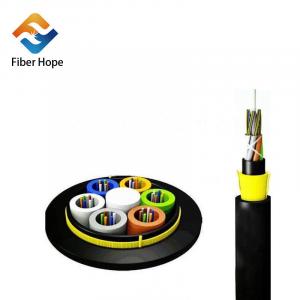
SHENZHEN, GUANGDONG, CHINA, November 26, 2026 /EINPresswire.com/ -- Why ISO9001 Compliance Makes Fiber Hope A Reliable Self-Supporting Fiber Cable Manufacturer
Telecommunications operators and utility providers across global markets face stringent operational demands when constructing high-capacity aerial fiber networks. Overhead optical infrastructure must endure continuous physical stress, including high wind speeds, heavy ice accumulation, and significant temperature fluctuations, without experiencing physical deformation or optical signal degradation. Consequently, procurement teams look beyond simple product specifications, focusing heavily on factory quality management systems and standardized manufacturing controls. Partnering with a Reliable Self-Supporting Fiber Cable Manufacturer ensures that every shipped cable drum meets international mechanical and optical criteria consistently. Establishing transparent manufacturing protocols reduces long-term maintenance costs and minimizes catastrophic field failures along major transmission corridors. As network expansion accelerates worldwide, technical auditors systematically review factory compliance documentation, factory acceptance testing protocols, and raw material traceability frameworks before committing to multi-year supply contracts. Furthermore, rigorous supply chain vetting guarantees that deployed assets deliver decades of reliable service without unexpected attenuation spikes or structural failures.
Demystifying Optical Compliance: Differentiating Quality Management Certification from Product Performance Verification
Procurement specialists often encounter confusion when evaluating international manufacturing credentials and compliance documentation during project bidding phases. A common misconception equates quality management system certifications directly with individual product performance compliance. In practice, ISO 9001 certification validates that a manufacturer maintains standardized, repeatable operational processes across administration, raw material sourcing, production, and quality control. Conversely, product performance credentials, such as CE marking, RoHS compliance, or specific mechanical test reports, verify that a distinct cable construction satisfies environmental safety and optical transmission limits. Detailed industry guides analyzing how to choose the right aerial fiber optic cable emphasize that thorough technical audits must examine both operational process controls and physical product test results. Relying solely on product samples without verifying systematic quality management introduces severe operational risk. A factory lacking rigorous process controls might produce an exemplary test sample but fail to maintain uniform sheath thickness or consistent fiber attenuation across large volume production runs. Therefore, procurement teams must request factory acceptance test reports, third-party inspection certificates, and complete lot-level material traceability to safeguard physical layer investments. Establishing this dual-verification approach eliminates potential compliance gaps and protects network operators from costly premature replacements.
Mechanical Engineering Audits: Structural Evaluation Criteria for ADSS and Figure-8 Aerial Cables
Selecting the optimal aerial cable architecture requires a comprehensive structural evaluation tailored to specific environmental conditions and pole attachment infrastructure. Aerial deployments generally divide into two primary structural categories: All-Dielectric Self-Supporting (ADSS) cables and Figure-8 armored self-supporting cables, such as the GYXTC8S and GYTC8S series. Figure-8 cables integrate a dedicated steel stranded messenger wire directly into the outer polyethylene jacket profile during extrusion. This integrated design provides exceptional tensile strength, simplifies single-pass installation on utility poles, and lowers labor overhead for rural broadband expansion projects. The steel messenger absorbs high longitudinal tension, protecting the central loose tube and optical fibers from mechanical strain under heavy wind loading. Conversely, ADSS cables utilize non-metallic aramid yarn strength members, making them non-conductive and ideal for high-voltage power utility corridors where electrical tracking resistance is essential. During mechanical engineering audits, buyers must demand specific verification evidence, including tensile load curves, crush resistance metrics, temperature cycling data, and messenger-to-jacket bond strength test logs. Verifying these physical characteristics prevents premature sagging, jacket splitting, or optical attenuation spikes caused by environmental weathering over decades of continuous service. Moreover, understanding span length limitations and sag-tension parameters ensures that cables are installed within safe engineering margins across diverse topographical terrains.
The ISO 9001 Traceability Matrix: How Fiber Hope Enforces Process Controls from Raw Glass to Dispatch
Translating quality management principles into reliable optical products requires strict adherence to standardized manufacturing workflows at every stage of production. Fiber Hope (Fiber Hope Optical Communication Tech Co.,Ltd.) embeds ISO 9001 quality controls throughout its entire manufacturing infrastructure. Process discipline begins with incoming raw material qualification. Premium G.652D and G.657A optical fibers, high-tensile steel messenger wires, and UV-resistant polyethylene compounds undergo baseline screening prior to staging on active production lines. During extrusion, precision laser gauges monitor sheath concentricity, outer diameter uniformity, and messenger wire spacing in real time. This continuous monitoring prevents physical thin spots along the outer jacket that could allow moisture ingress or structural failure under tension. Furthermore, loose tubes receive precise petroleum jelly filling to prevent longitudinal water migration while allowing adequate fiber movement during thermal expansion. Crucially, Fiber Hope enforces a complete lot-level traceability matrix. Every finished cable drum receives a unique serial code linking it directly to raw material batch test reports, inline extrusion logs, and final optical attenuation inspection records. This rigorous process tracking gives global buyers complete transparency and verifiable quality assurance. Additional environmental stress screening confirms that finished reels withstand severe thermal and mechanical shocks before leaving the manufacturing facility.
Partnering with Certified Manufacturing Excellence: Securing Long-Term Aerial Infrastructure
Building resilient overhead communications networks requires combining sound mechanical engineering with dependable, process-driven manufacturing partners. As utility companies and internet service providers scale high-speed fiber deployments across challenging geographic regions, the demand for verifiable quality standards will remain paramount. Establishing supply agreements with ISO 9001 certified suppliers provides project planners with predictable delivery schedules, consistent optical performance, and robust mechanical durability. Industry professionals, engineering contractors, and procurement managers can review factory quality management certifications, product specifications, and detailed compliance documentation directly through Fiber Hope at https://www.cablefiberhope.com/. Proactive technical alignment and rigorous factory auditing empower telecommunications providers to deploy long-lasting aerial networks, connecting communities safely and efficiently. Furthermore, ongoing collaboration with Fiber Hope Optical Communication Tech Co.,Ltd. ensures that network operators stay ahead of evolving industry standards, maintaining high bandwidth capacity and uninterrupted service reliability across future expansions.
Fiber Hope Optical Communication Tech Co., Ltd.
Fiber Hope Optical Communication Tech Co., Ltd.
Legal Disclaimer:
EIN Presswire provides this news content "as is" without warranty of any kind. We do not accept any responsibility or liability for the accuracy, content, images, videos, licenses, completeness, legality, or reliability of the information contained in this article. If you have any complaints or copyright issues related to this article, kindly contact the author above.
