Q&A
Q-0001 · 2026-05-2912 Ways to Reimagine Traditional COO Responsibilities for Today's Business Environment
The role of the Chief Operating Officer has evolved far beyond traditional oversight and daily management. Industry experts now recognize that modern COOs must balance structural discipline with adaptive strategy, driving both efficiency and innovation across their organizations. This article explores twelve strategic shifts that redefine operational leadership for today's rapidly changing business landscape.

Embed Standards To Elevate Accuracy
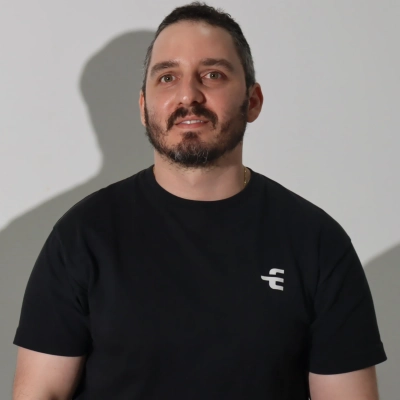 Louis DucruetFounder and CEO, Eprezto
The traditional COO responsibility I had to reimagine most fundamentally was quality control.
In a traditional business, quality control means layers of review. Multiple people check work before it reaches the customer. Managers review what their teams produce. Senior leaders review what managers approve. The process is thorough but slow, expensive, and built for organizations with large teams.
At Eprezto, we operate with a lean team producing a high volume of customer-facing content and communications. We could not afford multiple review layers but we also could not afford errors in an industry where inaccurate information creates regulatory and trust risks. The traditional approach was impossible. Ignoring quality was unacceptable.
The adaptation was shifting from hierarchical review to embedded standards. Instead of having people check other people's work, we built quality criteria directly into the process itself. Content templates include mandatory accuracy checkpoints. Communication frameworks have pre-approved language for sensitive topics. Publishing workflows have built-in verification steps that the creator completes as part of production rather than a separate reviewer completing after.
The key shift was moving quality from something that happens to work after it is done to something that happens within the work as it is being created. The person doing the work is also the person ensuring quality because the tools and templates make it natural rather than additional.
The result was that our error rate dropped while our output speed increased. We publish more content with fewer mistakes than when we had a traditional review process because quality is embedded in how the work gets done rather than bolted on at the end.
The broader lesson is that lean teams cannot replicate traditional corporate structures at smaller scale. You have to redesign the function entirely. The question is not how do we do the same thing with fewer people. It is how do we achieve the same outcome through a completely different approach.
Orchestrate Networks For Flexible Fulfillment
 Joe SpisakCEO, Fulfill.com
I'll be honest - I've never held a traditional COO title. I've been a founder and CEO who had to do everything, including the operational heavy lifting most COOs handle. So I'm going to reframe this around the biggest operational challenge I faced that forced me to completely rethink how things "should" work.
The traditional playbook says you centralize fulfillment operations for efficiency and control. One massive facility, standardized processes, economies of scale. When I was running my fulfillment company, I believed that too. We had our 140,000 square foot facility and pushed every client toward our systems.
Then I started Fulfill.com and realized I'd been thinking about operations completely backward. The COO mindset of "optimize what we control" was killing flexibility for the brands we served. I watched companies outgrow their 3PLs not because the warehouse was bad, but because one location couldn't serve both coasts efficiently. Or they needed specialty services like kitting that their current provider didn't offer. The traditional operational response would be "build those capabilities in-house." That takes years and millions.
So we flipped it. Instead of controlling the operations, we built a marketplace that gives brands access to 800 verified providers with different specialties and locations. It's the opposite of traditional COO thinking. We don't own the warehouses, don't control the processes, don't standardize anything. We match and connect.
Results? Nature Hills Nursery saved over 334,000 dollars annually by switching to a provider in our network. They cut transit times 18 percent and reduced damage claims 40 percent. That wouldn't have happened if we'd forced them into a one-size-fits-all operational model.
The lesson I learned is that modern operations isn't about controlling more, it's about orchestrating better. The best operators today are building networks and platforms, not just bigger buildings.
Adopt Agile Data-Driven Cadence

One of the most challenging traditional COO responsibilities to reimagine has been operational planning and execution in environments defined by rapid digital disruption and distributed workforces. Conventional operating models relied heavily on annual planning cycles and fixed resource allocation, which often limited responsiveness to shifting market and talent dynamics. McKinsey research indicates that organizations adopting agile operating models are up to 30% more likely to respond effectively to market disruption, reinforcing the need for continuous, rather than static, operational adjustment. The adaptation has involved embedding real-time performance data, cross-functional collaboration mechanisms, and iterative decision-making loops into core operations, enabling faster recalibration of priorities and resources. A notable outcome of this shift has been improved execution velocity and more efficient resource utilization, particularly in workforce development and project delivery functions. The broader transformation reflects a move from hierarchical control structures to adaptive operating systems, where agility, skills intelligence, and continuous capability building drive sustained organizational performance.
Pivot To Signal-Led Purchases
 Rory KeelOwner, Equipoise Coffee
Supply chain forecasting was hands down the toughest traditional responsibility I've had to completely rethink at Equipoise Coffee. The old playbook said you project demand based on historical data, place orders months ahead, and manage inventory levels to keep costs down. But specialty coffee doesn't work like that anymore.
When I joined, we were sitting on thousands of dollars in green coffee that had lost its luster because we'd over-ordered based on last year's numbers. Meanwhile, our customers were asking for single-origin micro-lots we'd passed on because they didn't fit our projections. The disconnect was real.
I scrapped our quarterly forecasting model and moved to what I call responsive sourcing. Instead of locking in large volumes, we built relationships with importers who could move quickly and positioned ourselves to buy smaller lots based on real-time demand signals. We started tracking not just what sold last month, but what our community was talking about, what flavor profiles were trending in our subscription feedback, and which origins were generating buzz.
The shift meant I had to let go of the comfort of big inventory numbers on a spreadsheet. That was scary at first. But the results spoke for themselves. Our waste dropped by forty percent in the first year. More importantly, we could roast and ship coffees that actually excited people instead of pushing what we had in the warehouse.
We also started releasing small batch offerings that would sell out in days rather than sitting around for weeks. Our subscription retention improved because members felt like they were getting something special, not just whatever we needed to move.
The biggest lesson for me was recognizing that efficiency isn't always about volume and predictability. Sometimes it's about staying close enough to your customers that you can pivot quickly. Traditional operations training taught me to minimize risk through planning. At Equipoise, I've learned that calculated flexibility creates its own kind of stability.
Design Structural Outcome Accountability
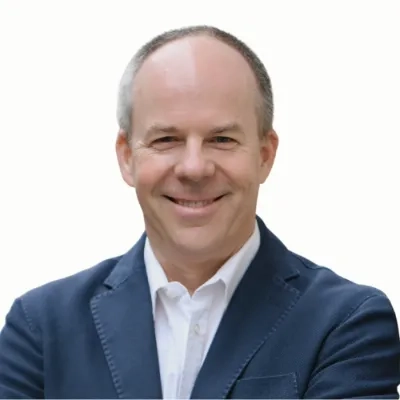 Derek FredricksonFounder & CEO, The COO Solution
The responsibility I have had to reimagine most significantly is accountability itself.
In the traditional COO model, accountability was largely proximity-based. You could see who was in the office, sit in on meetings, read the room, and course-correct in real time. The operating assumption was that visibility created accountability, and the COO's job was to hold the standard by being present enough to enforce it.
That model does not work today. The businesses I operate within and the operators I place through The COO Solution work across distributed teams, hybrid structures, and time zones where proximity-based accountability is impossible. Trying to replicate the old model in a new environment produces micromanagement at best and complete breakdown at worst.
The adaptation required a fundamental shift. Instead of managing presence and activity, the reimagined model manages outcomes and ownership. Every role has a clearly defined set of results it is responsible for, not tasks to complete but outcomes to own. The COO's job shifts from enforcing compliance through visibility to designing the system that makes accountability structural rather than supervisory.
The practical implementation looks like this. Clear ownership documented at the role level. A weekly rhythm where each team member reports on owned metrics to the whole leadership team simultaneously. A single source of operational truth where progress is visible to everyone without anyone having to ask. And a culture where bad news surfaces quickly because transparency is rewarded rather than punished.
The results have been consistent. Teams take more genuine ownership when accountability is structural. Problems surface earlier. And the COO's time shifts toward strategy, team development, and organizational design.
Accountability was never really about proximity. It was about clarity and consequence. When those two things are well-designed, accountability happens without the COO needing to be in every room.
Center Care On Trauma-Informed Relationships
 Wayne LowryExecutive Director / CEO, Sunny Glen Children's Home
I'll be honest with you, I'm not the COO at Sunny Glen Children's Home, but as a staff member who's been here for years, I've watched our leadership completely reimagine how we handle staffing and care delivery. I've been right in the middle of implementing those changes.
The traditional model in residential care was pretty rigid. You had set schedules, set routines, and staff essentially functioned like supervisors making sure kids followed rules. That approach doesn't work anymore. Honestly, it never really did.
What we've had to do is shift to a trauma-informed, relationship-based model. This meant rethinking everything from how we schedule staff to how we train them. In the old days, you'd just make sure you had enough bodies on shift. Now we're intentional about matching staff with youth based on relationships and therapeutic needs.
The adaptation wasn't easy. We had to invest heavily in training. I'm talking weeks of trauma-informed care education, de-escalation techniques, and understanding adverse childhood experiences. Staff had to unlearn old habits and develop new skills that prioritized connection over compliance.
We also changed our scheduling approach. Instead of rotating staff through different cottages randomly, we created consistent teams so young people could build real relationships with their caregivers. This required more flexibility from everyone involved.
The results have been remarkable. We've seen a significant drop in behavioral incidents. Youth are more stable, and when they do struggle, we're better equipped to help them through it. Staff retention has improved because people feel more competent and connected to their work.
What strikes me most is how this shift changed our culture entirely. We went from managing behaviors to building genuine relationships. The kids notice the difference, and so do we.
Champion Digital Transformation And Talent Strength
 RUTAO XUFounder & COO, TAOAPEX LTD
A successful Chief Operating Officer reimagines responsibilities by prioritizing agility, digital transformation, and talent optimization. This adaptation involves moving beyond traditional operational oversight to actively champion innovation and foster a culture of continuous improvement across all departments. Effectiveness in an evolving role hinges on strategic foresight, the ability to anticipate market shifts, and a commitment to data driven decision making. Proactive engagement with emerging technologies and cultivating strong cross functional leadership are essential for maintaining relevance and driving sustainable growth. The modern Chief Operating Officer excels by transforming operational challenges into strategic advantages, ensuring the organization remains resilient and competitive.
Treat Documentation As Core Infrastructure
 Nick AnisimovFounder, FirstHR
The hardest traditional COO responsibility to reimagine was process management and knowledge transfer.
In the old model, operations ran on physical presence. Processes lived in people's heads, knowledge was transferred through hallway conversations, and control happened through visibility. You could see who was working, catch problems early, and course-correct in real time.
That model broke completely with remote and hybrid work. When you cannot see the team, undocumented processes become invisible failures waiting to happen. A key person leaves or gets sick, and suddenly nobody knows how something works.
The adaptation was treating documentation as infrastructure, not administration. Every process is written down before someone needs it. Every workflow is described well enough that a new hire can execute it without asking five people for context.
The result was not just operational resilience. It changed how we hire, how we onboard, and how fast new people become productive.
Nick Anisimov
Founder, FirstHR
https://firsthr.app
https://www.linkedin.com/in/nickanisimov/
Route Demand With Marketplace Liquidity
 Faiz AhmedFounder, GpuPerHour
The traditional COO responsibility I had to reimagine most dramatically was capacity planning. In a conventional operations role, capacity planning means forecasting demand, provisioning resources ahead of that demand, and maintaining buffer inventory. At GpuPerHour, that model breaks down completely because we operate a two-sided marketplace where both supply and demand are variable, and the underlying resource, GPU compute time, is perishable. An unsold GPU hour at 2 AM on a Tuesday is revenue that vanishes permanently.
The traditional approach would be to own a fixed pool of GPU capacity and manage utilization rates like a hotel manages room occupancy. I adapted this by building a dynamic supply aggregation model where we do not own the GPUs. We match customers who need compute with providers who have idle capacity. The COO function shifted from managing physical assets to managing marketplace liquidity. Instead of tracking inventory levels, I track supply-demand ratio by GPU type, time of day, and geographic region. Instead of negotiating bulk purchase agreements with hardware vendors, I negotiate availability commitments with compute providers.
The result was a capital-light operating model that scales without the massive infrastructure investment that traditional capacity planning requires. Our GPU utilization rates across the marketplace average 73 percent, compared to the industry average of 40 to 50 percent for owned infrastructure. That efficiency gap exists because marketplace dynamics naturally route demand to wherever capacity is available, which is something static capacity planning cannot replicate.
The broader lesson is that the COO role in a platform business is less about controlling operations and more about designing systems that let operations self-organize. The best operations leaders today build frameworks and feedback loops rather than managing processes directly.
Faiz Ahmed
Founder, GpuPerHour
Create Capacity Through Unified Automation
 Carlos CorreaChief Operating Officer, Ringy
The hardest classic COO task I had to adapt was solving a growth capacity problem by adding more people. Instead, the new Ops Officer has to solve the problem now by creating capacity through unified automation.
When you treat Operations as a system-consolidation problem, many whole organizations eliminate a seasonal hiring need completely, and also drive project ROI above 200%. A traditional Operations lead would build out a staffing schedule to address spikes in volume.
I adapted that by saying, you shouldn't solve a queue of support requests or data entry tasks by throwing more heads at it. Instead, consolidate all the tools in your technology stack and then create automation options for the front line. And this gets executed perfectly at a big publisher client, who usually experiences massive seasonal support volumes.
Instead of ramping up their usual huge temporary support headcount, they've automated the common customer support questions with an AI chatbot front end. By automating and reducing the number of cases that need to be handled, seasonal temp hiring ended up being reduced to near zero, their issue resolution times improved dramatically, and they reported a >200% ROI on the system implementation.
But it only works if you kill the data silos first with automation capacity creation. One of the patterns I've seen in global enterprise ops roles is the need to unify the CRM system before anything else. One device I'm familiar with is a large multinational retailer consolidating its disparate regional tools into a unified framework.
Getting that single source of truth across regions drove their customer retention metric (which was fairly normalized at around 60%) up to 78%. Their conversion of sales from customers also went from 20% to 25%. When you prioritize unifying the CRM data upfront with automation, instead of creating headcount, you elevate what your staff does at a high level, permanently.
Protect Creative Freedom With Lean Guardrails
 Philip HeusserPresident & Co-Founder, Motif Motion
Creative Operations Needed Structure Without Killing Creativity
Yeah, managing creative production workflows without crushing the spark that makes great work has been one of the toughest shifts I've had to make. Operations normally means process, predictability, efficiency. But in a creative environment like Motif Motion, too much structure goes wrong quickly. Teams stop collaborating, ideas stop flowing and the fun gets sucked right out of the room.
When we were scaling up, our first idea was to double down on tight controls. And to be honest, that only made things worse. Creativity stopped dead in its tracks, and friction between teams soared.
Clearly we needed a different approach.
We started to develop workflows that were straightforward and adaptable. We put in clear milestones, streamlined the approval process and made it easier for people to see where their projects were. At the same time, we made sure that in the real creative moments we gave teams plenty of room to do what they do best.
The trick was finding a line between the structure that keeps projects moving and the creative zones where people need some space. We established firm timelines, defined roles, and enhanced communication—all while refraining from micromanaging each creative decision. The result was instant. Less revision headaches Better internal communication Less delays and honestly the work just got a lot better. People were not distracted by endless process so their best ideas surfaced.
I think the big takeaway here is this: Today, running creative operations isn't about controlling it all. It's about creating enough structure to prevent things from falling apart, but not so much that you kill the reason you hired creative people in the first place. It doesn't mean no rules to support creativity. It's just about building smart ones that let great ideas grow.
Replace Verbal Chaos With Written Handovers
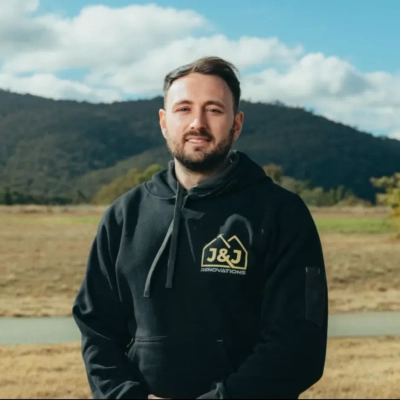 James RudgeOwner, J&J Renovations
The COO-style responsibility I've had to reimagine is coordination. In a renovation business, coordination used to mean holding everything in your head, chasing trades, answering clients and fixing gaps as they appeared. That does not work anymore because clients expect clearer updates, trades need cleaner handovers, and one missed detail can turn into cost, delay or rework. I adapted it by moving from verbal memory to written handovers: what was promised, what is excluded, what the client cares about, who owns each part, and when an issue must be raised. The result is not some flashy transformation; it is fewer repeat questions, fewer assumptions, and a team that can keep moving without waiting for one person to remember every detail.